Window glazing affects how heat and daylight enter your home, how much outside noise reaches your rooms, and how glass behaves if it breaks. Understanding the different types of window glazing helps you compare windows beyond their appearance.
MOLI Windows & Doors provides windows and doors for residential and commercial projects. This article focuses on homeowners: what each glazing option does, why it matters, and which ratings help you compare choices.
Key Takeaways: Types of Window Glazing
- Window glazing includes the glass panes, coatings, and insulating spaces that work together to influence window performance in your home.
- Double and triple glazing use sealed spaces between panes to reduce heat transfer, but pane count alone does not determine performance.
- Low-E coatings manage radiant heat, while gas fills reduce heat transfer through the sealed spaces between panes in insulated windows.
- MOLI Windows & Doors offers optional triple glazing and Low-E coatings; the appropriate combination depends on your project and performance requirements.
- Tempered and laminated glass describe safety-related glass properties, not pane count, and can be part of an insulated window system.
What Is Window Glazing?
Window glazing is the glass portion of a window, including the components that form its glass system. A window can have one pane or several, with coatings and sealed spaces that change how it performs.
The categories overlap. A double-glazed window can also have a Low-E coating, argon gas between the panes, and safety glass. These terms describe different features rather than competing alternatives.
Glazing also works with the frame, seals, and installation. The performance of your finished window depends on the complete assembly, not the glass alone.
How Do Single, Double, and Triple Glazing Differ?
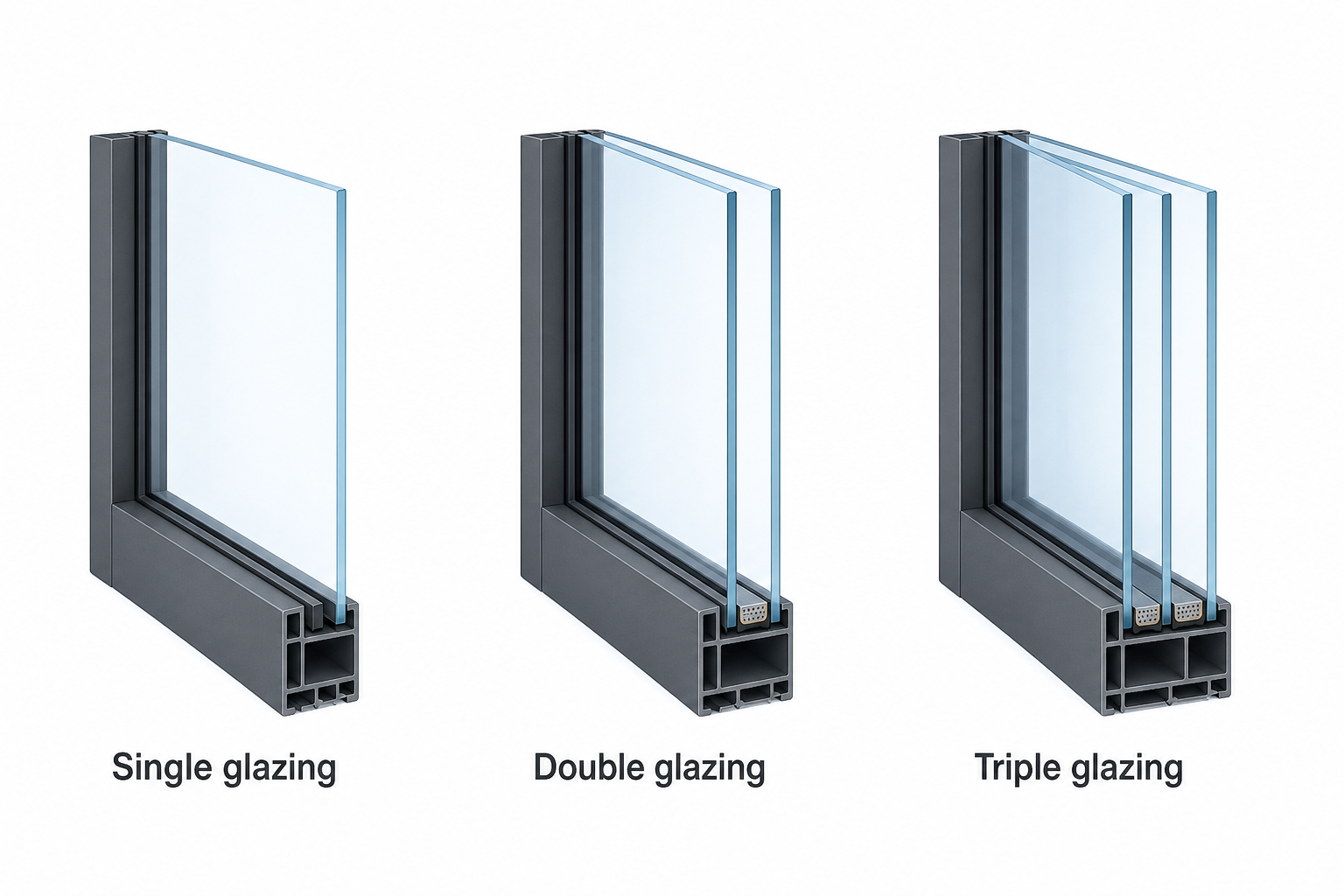
AI-generated conceptual illustration of pane configurations. Not to scale; not a product specification.
Single, double, and triple glazing differ primarily in pane count and the number of insulating spaces between those panes.
Single glazing: one pane
Single glazing has one glass pane without an insulating cavity. It offers less resistance to heat transfer than a comparable insulated glass system. A room near single-pane windows may be more affected by outdoor temperatures.
Double glazing: two panes
Double glazing uses two panes separated by a sealed space containing air or an insulating gas. This space reduces heat transfer. Coatings, gap width, and frame construction also affect the result.
Triple glazing: three panes
Triple glazing adds a third pane and a second insulating space. It can reduce heat transfer compared with a comparable double-glazed unit. Compare actual whole-window ratings rather than assuming every triple-glazed window outperforms every double-glazed window.
What Do Low-E Coatings and Gas Fills Do?
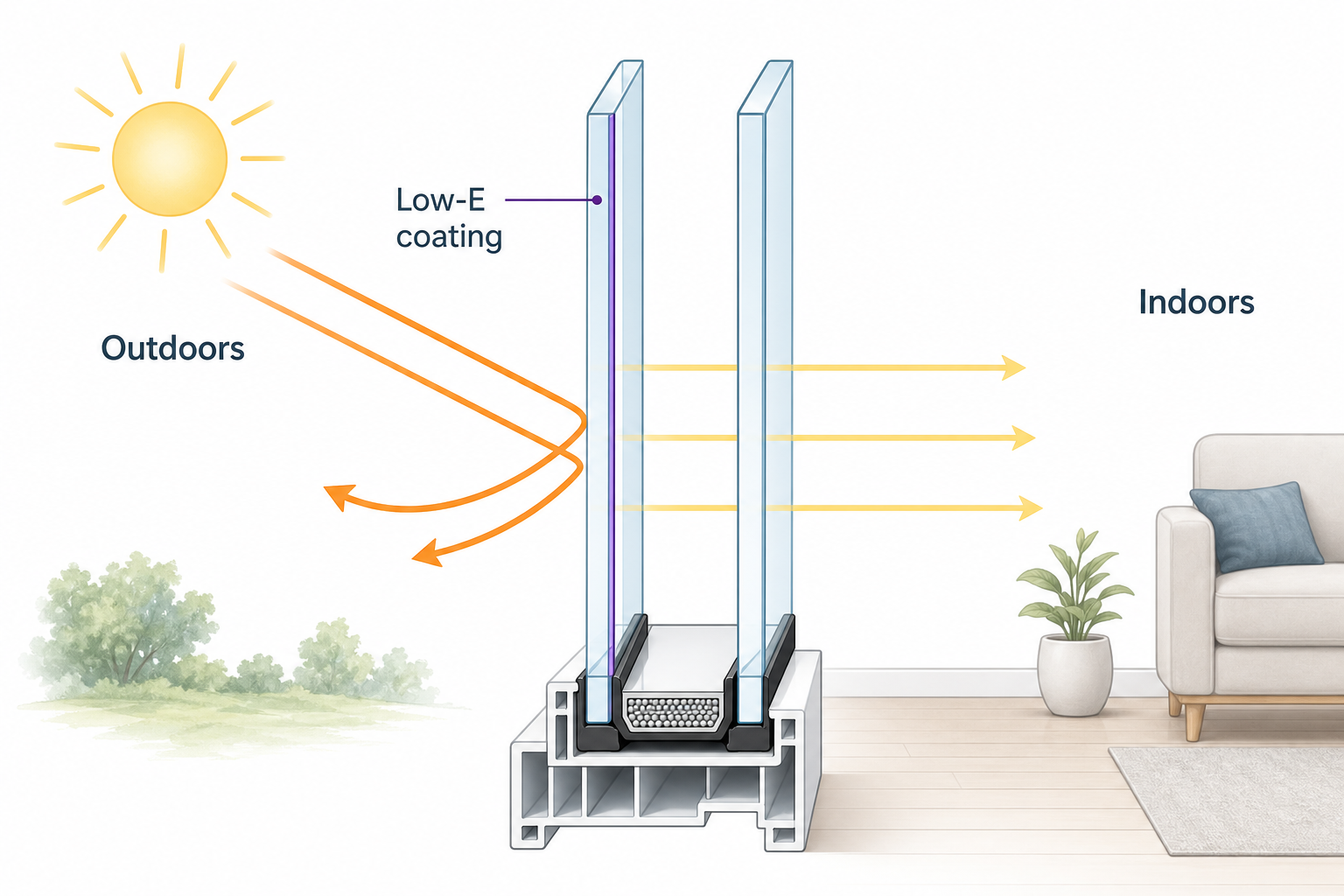
AI-generated conceptual illustration. Solar-control performance varies by coating and complete window assembly.
Low-E coatings control radiant heat transfer, while insulating gas fills reduce heat transfer through the spaces between panes. Both can be used in double or triple glazing.
Low-E means low emissivity. These thin coatings limit radiant heat transfer while allowing daylight through. Different coatings balance solar heat control and daylight differently. In a hot climate, the coating's solar-control performance is particularly relevant.
Argon and krypton conduct heat less readily than air. Sealed between panes, they help improve insulation. Their effectiveness depends on the glass unit's design, including cavity width.
The Department of Energy explains how glazing, coatings, gas fills, and frames contribute to window performance.
How Do Tempered and Laminated Glass Differ?
Tempered and laminated glass differ in construction and breakage behavior. Neither term tells you whether a window is single, double, or triple glazed.
Tempered glass is heat-treated to increase its strength. When broken, it generally fractures into small pieces rather than large shards. Those pieces can still cause injury, and the broken glass may fall out of the opening.
Laminated glass bonds glass layers around an interlayer. Fragments tend to adhere to that layer after breakage. Some laminated constructions also help control sound; performance depends on the specific assembly.
Building codes require safety glazing in specified hazardous locations, such as certain areas near doors and bathing enclosures. Requirements depend on the location and applicable code. Do not assume any tempered or laminated product automatically meets every safety requirement.
Why Does Glazing Matter for Your Home?
Glazing influences heat control, comfort, daylight, sound transmission, and safety. The appropriate combination depends on your climate, window orientation, and room use.
Better insulation helps keep interior glass temperatures closer to room temperature. Solar-control glazing can limit unwanted heat gain. In Phoenix, compare solar heat gain carefully, especially for windows exposed to strong afternoon sun.
More panes do not automatically mean a quieter room. Glass thickness, interlayers, spacing, seals, and the complete window affect sound transmission. Ask for acoustic test data if noise control is a priority.
MOLI Windows & Doors offers optional triple glazing and Low-E coatings for its window systems. Its technical information provides additional context for evaluating the complete system.
How Can Homeowners Compare Window Glazing?
Whole-window performance ratings let you compare glazing as part of the finished window, rather than judging by pane count alone.
- U-Factor: Describes heat transfer through the window. Lower values indicate better insulation.
- Solar Heat Gain Coefficient (SHGC): Describes how much solar heat enters through the window. Lower values help limit unwanted solar heat gain.
- Visible Transmittance (VT): Describes how much visible light passes through. Higher values mean more daylight transmission.
Use NFRC-certified whole-window ratings for the exact product you are considering. Air leakage and condensation resistance information can also be useful when provided. Energy ratings do not replace separate safety or acoustic evaluations.
Consider window style alongside glazing. A Fixed window and an operable Casement window serve different ventilation needs. Compare their specific ratings rather than assuming identical performance.
Choosing Glazing for Your Home
The appropriate glazing combines insulation, solar control, daylight, and any required safety properties. Start with your climate and the rooms you want to improve, then compare verified whole-window ratings.
For project context, MOLI's project gallery shows completed installations. Appearance can help guide design choices, but performance should be evaluated using product-specific information.
FAQs About Window Glazing
Is double glazing the same as Low-E glass?
No. Double glazing describes two panes separated by a sealed space. Low-E describes a coating that manages radiant heat. The two features can work together. MOLI Windows & Doors offers optional Low-E coatings; confirm the proposed glazing configuration for your project.
Is triple glazing always better for a home?
No. Triple glazing can improve insulation, but its value depends on climate, coatings, frame construction, and your priorities. MOLI Windows & Doors offers optional triple glazing. Compare whole-window ratings and project requirements rather than selecting by pane count alone.
Does glazing reduce outside noise?
Glazing can reduce outside noise, but pane count alone does not predict the result. Glass thickness, pane spacing, laminated interlayers, and seals all matter. Request tested acoustic ratings for the complete window if traffic or other outside noise is a primary concern.
Can the same glazing work in every room?
The same glazing may suit several rooms, but sunlight exposure, safety requirements, and comfort priorities can differ. Window operation matters too: an Awning window provides ventilation that a fixed pane does not. Evaluate glazing and operation together.
What should I ask before ordering windows?
Ask for the exact pane configuration, coatings, gas fill, whole-window energy ratings, and any required safety or acoustic documentation. Contact MOLI Windows & Doors to discuss your project, including the rooms, window orientation, and performance priorities.